 Interoper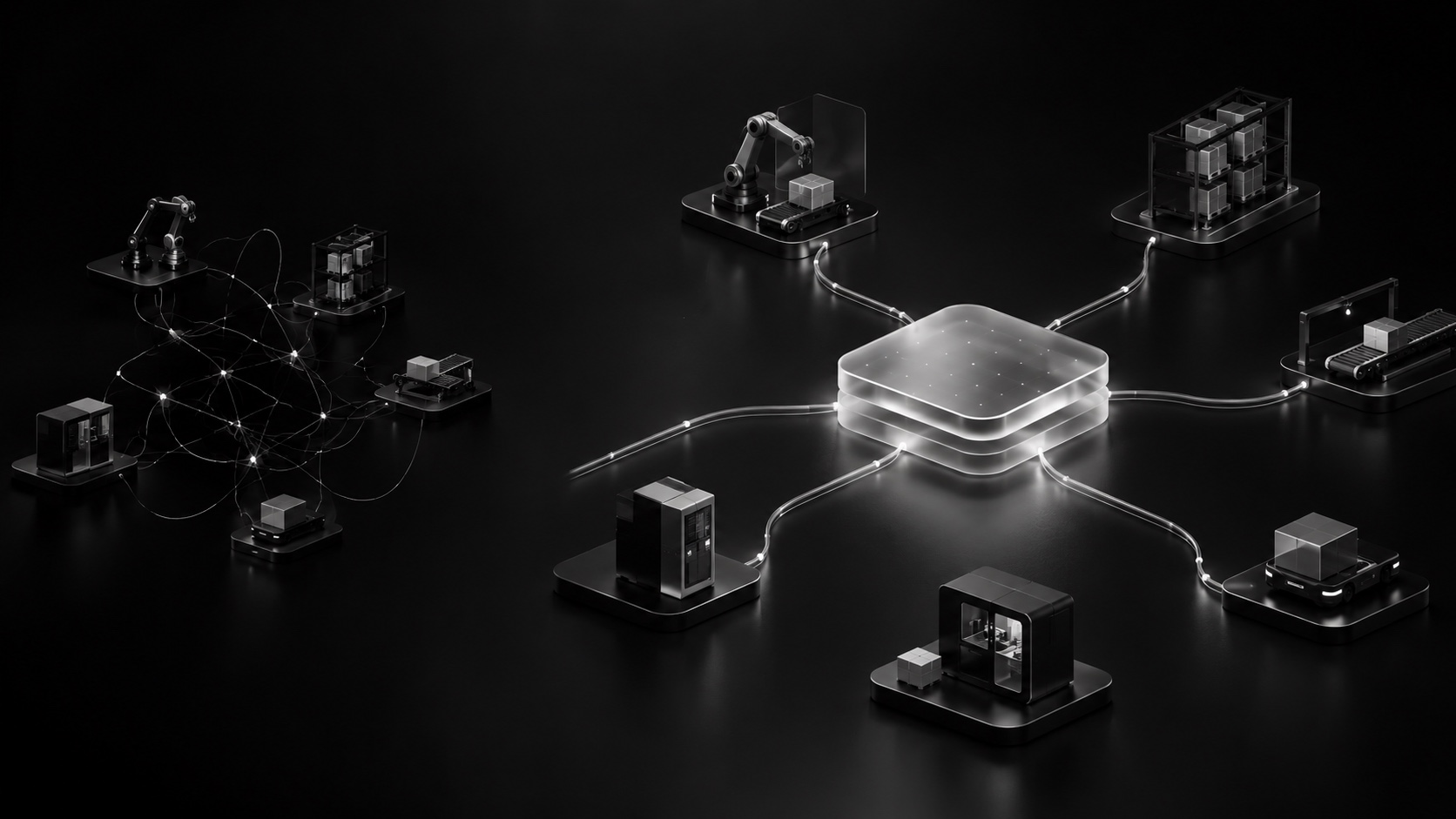
TL;DR
- Point-to-point integration connects each system directly to every other system it needs to work with. It suits two or three systems, and gets harder to manage with each one you add.
- An orchestration layer sits above your systems and coordinates them from one place, so each system connects once rather than to every other.
- The numbers show the difference: five systems that all need to talk to each other can need up to 10 connections point-to-point, but only 5 with a layer.
- In a mixed-vendor fleet where people work alongside the robots, that layer is where work, priorities and handovers can be decided across the whole operation.
What is point-to-point integration?
Point-to-point integration means connecting two systems directly to each other. Robot fleet A talks to the warehouse management system. Fleet B talks to it too, through a separate connection built for B's own interface. If A and B need to know about each other, someone builds a third connection between them.
This is a sensible way to start. With only a few systems, the connections are easy to understand and each one does a single job.
The difficulty is how the connections multiply. Every new system needs a link to each system it has to work with. Each link has its own format, its own behaviour when something fails and its own owner to call. Over time the operation ends up with a web of connections that few people fully understand.
The arithmetic shows why. If every system needs to talk to every other, the most connections you can need for n systems is n × (n − 1) ÷ 2. Five systems can need up to 10 connections, and six systems up to 15. With an orchestration layer, each system connects once: five systems need 5 connections, and six need 6.
What is an orchestration layer?
An orchestration layer is a coordination layer that sits above the systems it connects. Instead of every system talking to every other system, each one connects to the layer once. The layer holds the shared picture of what needs to happen and who or what is doing it.
The key word is coordination. The layer does not replace the robots' own control software or your warehouse systems. It decides which work goes to which fleet or person, and in what order, and passes those instructions down through each system's own interface.
Because everything meets in one place, adding or swapping a system means one new connection rather than several.
Point-to-point vs orchestration: what is the difference?
The first difference is where decisions are made. In a point-to-point setup, each system decides for itself and the connections only pass messages between them. With an orchestration layer, decisions about work that spans systems are made in one place.
The second is how change is handled. Replace or upgrade one system in a point-to-point setup and every connection to it needs checking. With a layer, the change is contained to that system's single connection to the layer.
The third is visibility. A point-to-point setup tends to leave each fleet with its own dashboard. A layer can offer one view of the whole operation.
None of this makes point-to-point wrong. For a single fleet and a single warehouse system it can be the simpler choice. The case for a layer grows with the number of systems involved.
What are the downsides of an orchestration layer?
A layer is one more piece of software to run, and because work flows through it, it becomes an important point in the operation. A well-designed layer is built so that each machine's own controls keep working if the layer is unavailable.
It also takes some upfront work. Each system still has to be connected once, and the site has to agree who owns the rules for dividing up work. For a very small setup, that effort may not be worth it.
Don't industry standards already solve this?
Standards help, but they cover less than people expect. VDA 5050, for example, defines how a fleet controller and its robots communicate. Standards like it mostly describe the conversation between a controller and its own robots. They do not decide which work goes to which fleet or person across the whole operation, and how closely each vendor follows them varies. A layer can make use of standards where they exist and bridge the systems that do not follow them.
Where does the warehouse management system fit?
In most sites, the warehouse management system decides what needs to be picked, moved or stored. An orchestration layer works alongside it, on the question of which fleet or person does each task.
What does this mean for a mixed-vendor fleet?
Many sites end up with robots from more than one vendor, bought at different times for different jobs. Each vendor's system is built to manage its own robots well. Robots from different vendors usually cannot coordinate with each other without extra integration work, because each system was built to manage only its own robots.
People complicate the picture, and they matter most. Pickers, operators and supervisors work in the same space as the robots, and they often fill the gaps between systems by hand: moving work between dashboards, resolving clashes and covering exceptions.
An orchestration layer for a mixed-vendor fleet connects to each vendor's system and treats people as part of the same coordinated operation. Interoper is built on that idea: humans first, any vendor, no lock-in.
What does this change for the business?
For the person responsible for a site's results, the difference shows up in three situations:
- Peak season. When volumes spike, work can be shifted between fleets and people from one place, instead of being rebalanced fleet by fleet.
- New clients. Taking on a new client's volumes means adding capacity to the operation, not rebuilding connections between systems.
- Adding or replacing a vendor. It means one new connection to the layer rather than several new connections between systems.
Who is responsible for safety?
Safety stays where it belongs. Interoper sits above machine safety and never overrides it. Certified machine safety systems remain responsible for keeping people and machines safe.
How do you know if you need an orchestration layer?
Whether a layer makes sense depends on your site. These questions help:
- How many separate systems or vendors do your robots and workers depend on today?
- Do those systems need to share work, or only run side by side?
- Who resolves clashes between them now, and how?
- What would it take to add or replace a vendor?
- Where is safety handled, and would anything you add leave it untouched?
If your answers point to a growing web of connections and a lot of manual coordination, an orchestration layer is worth considering. If you run one fleet with one system, point-to-point may be enough for now.
Frequently asked questions
What is the difference between an orchestration layer and point-to-point integration?
Point-to-point integration connects each system directly to every other system it works with. An orchestration layer sits above the systems and coordinates them from one place, so each system connects once.
When is point-to-point integration enough?
For one fleet and one warehouse system, or a small number of systems, point-to-point can be the simpler choice. The case for a layer grows with the number of systems involved.
Does an orchestration layer replace my robots' own software or my warehouse system?
No. The layer does not replace the robots' control software or your warehouse systems. It decides which work goes to which fleet or person, and passes the instructions down through each system's own interface.
Does an orchestration layer take over machine safety?
No. Interoper sits above machine safety and never overrides it. Certified machine safety systems remain responsible for keeping people and machines safe.